
One in three workers is burned out right now. The average person spends over 11 hours a day on screens. And yet, most of us keep grinding harder, convinced that more hours equals more output.
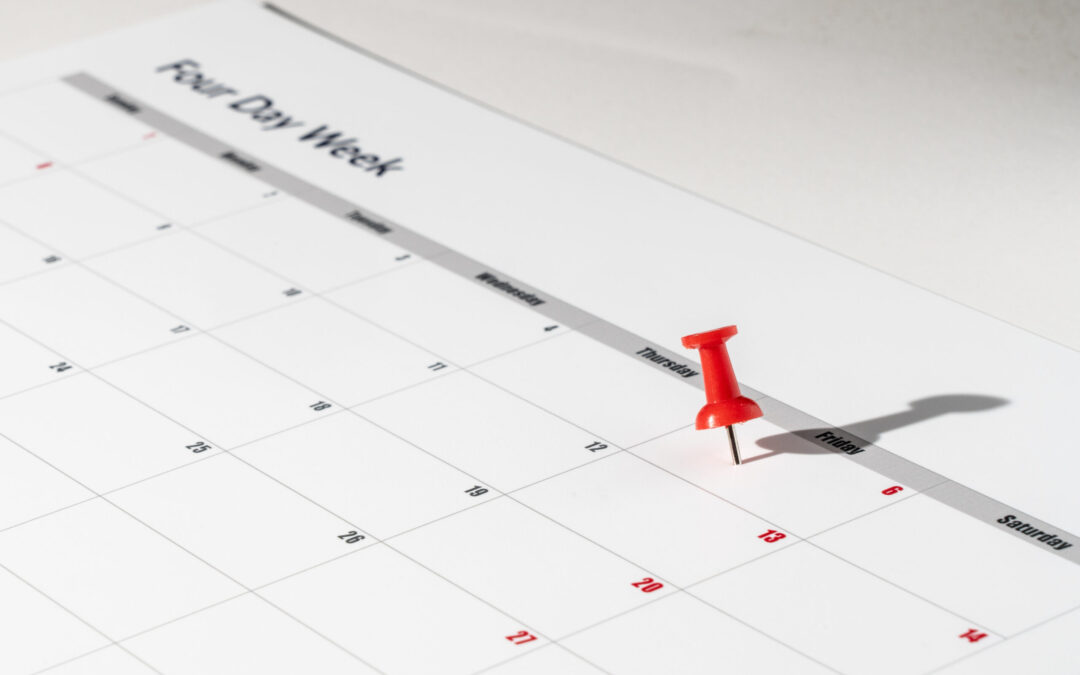
The research disagrees — and the largest study ever conducted on the four-day workweek proves it. In July 2025, the journal Nature Human Behaviour published findings from a six-month trial tracking 2,896 employees across 141 companies in six countries. The results weren’t subtle: burnout dropped, productivity held, and 92% of the companies involved chose to continue the shorter schedule after the trial ended.
You’re probably not getting a four-day workweek handed to you anytime soon. But the lessons buried in that research? Those are yours to take right now.
The Burnout Problem Is Bigger Than You Think
Before we get into solutions, it’s worth sitting with how bad things have actually gotten. Gen Z — the generation that grew up online — is burning out at a rate of 38%. Millennials follow closely at 37%. The culprit isn’t laziness or poor attitude. It’s an always-on culture that has systematically eliminated recovery time.
Think about what the average workday looks like in 2026. You wake up and check Slack before coffee. You end your day with a final email sweep that bleeds into dinner. You have 10 different communication channels running simultaneously. The brain doesn’t get a moment to reset — it’s just one long, low-grade sprint from morning to night.
Digital burnout has its own particular texture. It’s not just physical tiredness. It’s the foggy, irritable, can’t-quite-focus feeling that comes from constant context switching and information overload. And the irony? The more burned out you are, the more hours you tend to log, because tired people are inefficient people — and inefficiency demands more time to compensate.
What the Four-Day Workweek Research Actually Shows
The four-day workweek trials that have gained the most traction use what researchers call the 100-80-100 model: 100% of your pay, 80% of your typical hours, and an expectation of 100% output. You’re not working less — you’re working more intentionally.
The results from the UK trial are worth memorizing if you ever need to make the case to a skeptical manager. Revenue stayed broadly consistent (actually up 1.4% on average). Staff turnover dropped by 57%. Burnout fell by 71%. And when polled after the trial, 93% of US managers said they support a four-day schedule for their team.
What actually explains the productivity bump? Parkinson’s Law: work expands to fill the time available. Give most people five days to complete a week’s worth of work, and they’ll use five days. Give them four, and they’ll find ways to cut the fat — fewer pointless meetings, less context switching, more focused blocks of deep work. The constraint creates clarity.
The other factor is recovery. Sleep research has shown for decades that rested workers make better decisions, solve problems faster, and are less likely to make costly mistakes. An extra day off doesn’t make you less productive — it makes you better at the four days you are working.
Summer Is the Perfect Time to Run Your Own Experiment
Here’s a practical truth about summer: most people’s productivity already dips between June and August. Energy drops in the heat, colleagues go on vacation, and the pace of big decisions slows. Instead of fighting that current, you can use it as cover to test a different way of working.
You don’t need your boss to officially decree a four-day workweek. You need to look honestly at how your current work hours are actually spent, identify the dead time, and compress it. A few questions worth asking:
- How many meetings on your calendar actually require your live presence — versus could be an async message?
- What’s the last hour of your workday actually producing?
- How many times per hour do you check email or Slack by default?
Most people who do this audit are surprised by how much of their “working time” is reactive, low-value, or just the appearance of busyness. The four-day workweek research essentially forces that audit. You can do it voluntarily.
Practical Habits Worth Stealing Right Now
You don’t need a company-wide policy change to start applying these principles today. Here are the specific habits that research — and the digital wellness community — keeps coming back to.
The First and Last Hour Rule. Stay offline for the first 60 minutes of your day and the last 60 minutes before sleep. This isn’t about productivity gimmicks — it’s about neurological recovery. Starting your day reactively (opening email or Slack the moment you wake up) puts your brain in a defensive mode that’s hard to shake. Ending your day with screens keeps cortisol elevated when it should be falling. Two hours off, every day, is a genuine game-changer over time.
Batch your communication. Rather than treating every ping as an interruption requiring an immediate response, set two or three designated times per day to process messages. Most digital workers spend an enormous percentage of their day just responding to incoming requests — rarely doing the actual work they’re nominally there to do. Batching is the single habit that most reliably gives back hours.
Protect your deep work time like a meeting. Block two to three hours in your calendar for focused, heads-down work — then treat that block with the same respect you’d give a call with your CEO. A tool like Notion makes it easy to plan and track these blocks without overengineering things. The goal is just to make your most important work non-negotiable.
Try a Digital Sabbath. This is the practice gaining real traction in 2026: one day per week, you stay off screens entirely. Not a half-hearted “I’ll try not to check my phone” — a genuine, planned offline day. Eight out of ten people who’ve tried a structured digital detox describe it as liberating. The data from digital wellness platforms like Calm and Freedom backs that up: users who take structured breaks report meaningfully better focus on the days they return.
Use your vacation time. This seems obvious, but American workers left an estimated 768 million vacation days unused in 2023, and the trend hasn’t reversed. The “quiet vacationing” trend — secretly working while pretending to be on PTO — is a symptom of the same problem. Actual time off isn’t a luxury; the research now treats it as a prerequisite for sustained performance.
The Future of Work Is Already Here — Just Not Evenly Distributed
Sixty-four percent of companies expect to transition to a four-day workweek within the next five years. That’s not a fringe prediction — it’s the result of asking US managers directly. The economic argument is increasingly hard to ignore: when burnout costs employers $125–$190 billion in healthcare expenses annually in the US alone, rethinking how hours are structured becomes a business decision, not just a wellness initiative.
But even if your company is in the 36% that never gets there, the underlying message from all this research is the same: pure hours logged is a broken metric for knowledge work. What matters is quality of output, which is inextricably linked to quality of recovery.
The digitally casual approach isn’t about working less because it feels good (though it does). It’s about working smarter because the data is unambiguous. You can keep grinding through summer the same way you always have — or you can take the research seriously and try something different.
Start with one hour offline in the morning. See what happens.
Want to build a better work system? Notion remains one of the most flexible tools for planning focused work blocks, weekly reviews, and personal productivity systems without overengineering things. For a solid read on the science behind focused work, Cal Newport’s Deep Work is as relevant in 2026 as it was when it was published.