
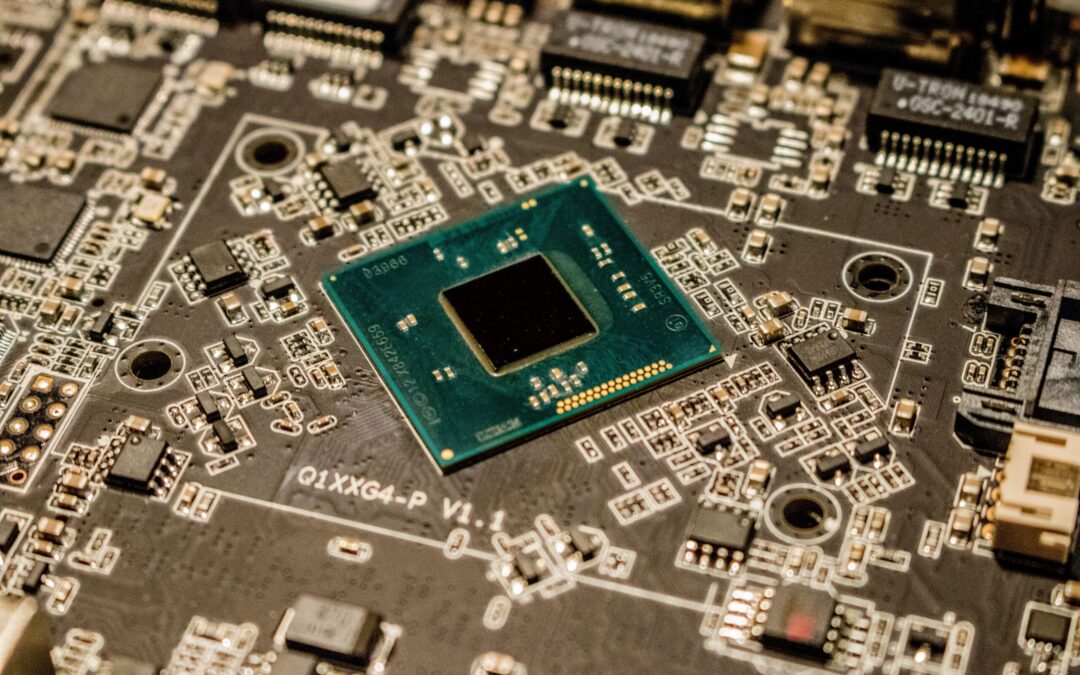
For the past two years, every laptop manufacturer has slapped “AI PC” on their marketing without much to show for it. A dedicated neural processing unit that runs Copilot slightly faster isn’t a revolution. Nvidia’s RTX Spark, unveiled at Computex 2026, is a genuinely different proposition—and it’s worth paying attention to.
What RTX Spark Actually Is
The RTX Spark is a superchip pairing an Arm CPU (up to 20 cores) with a Blackwell-generation GPU in a single package, connected via NVLink C2C. The key number: 128GB of unified memory shared between the CPU, GPU, and neural processing hardware. That’s not a typo. Most current laptops top out at 64GB with the memory split between processor and graphics. RTX Spark gives both full access to the entire pool.
That unified memory architecture is what makes the AI claims credible. Running a 120-billion-parameter language model locally—the kind of model that until recently required a server rack—needs roughly 70–80GB of memory. RTX Spark laptops will handle that natively, with room to spare. Context windows stretch to one million tokens, meaning the AI can “remember” an entire long novel’s worth of conversation or document content.
The Microsoft Angle
Nvidia isn’t doing this alone. Microsoft is deeply integrated—Jensen Huang called it the largest “PC reinvention in 40 years,” and Microsoft shares spiked 4.6% on the announcement. The Surface Ultra will be one of the first RTX Spark devices, and Windows is being rebuilt around an agentic AI model: rather than opening apps manually, you describe what you want done, and the AI orchestrates the apps for you.
Adobe is also involved, rebuilding the core rendering engine of Photoshop to be 100% GPU-accelerated for RTX Spark. Editing 12K video or working with 90GB+ 3D scenes—stuff that currently requires a dedicated workstation—becomes laptop territory.
Who This Is Actually For
Realistically, the first wave of RTX Spark laptops landing this fall will be expensive. Think $2,500–4,000+ from brands like ASUS, Dell, HP, Lenovo, and MSI. Early adopters will be creative professionals, developers running local AI models, and power users who want to stop paying cloud API fees for every AI task.
For everyone else, the more interesting story is how this filters down. Nvidia already outlined a three-generation roadmap (Rubin, then Rosa, then Feynman). By 2027–2028, the memory pools and AI compute levels arriving in premium laptops today will be mid-range specs. That’s when the “AI PC” promise actually reaches most people.
If you’re shopping for a high-performance laptop and can wait until fall 2026, RTX Spark devices will be worth comparing seriously against anything you’d buy today. If you’re buying now, the current generation of AI mini PCs offers surprisingly capable local AI performance at a fraction of future prices.
Gaming, Surprisingly
Nvidia isn’t abandoning its core gaming market. RTX Spark promises “100 FPS at 1440p” gaming via DLSS 4.5 and Multi Frame Generation—AI upscaling that generates intermediate frames to boost perceived performance. Whether that holds up in practice across demanding titles is something we’ll need hands-on time with fall devices to confirm. But putting a legitimate gaming GPU in the same package as serious AI hardware is an unusual combination that makes these machines more versatile than anything in their category.
The Bottom Line
RTX Spark is the first “AI PC” announcement where the underlying architecture actually justifies the label. 128GB unified memory, 1 petaflop of AI compute, and on-device models that previously lived only in data centers—these are real spec milestones, not marketing math. Fall 2026 will be an interesting time to be in the market for a new computer.